Dentell
Designing a compact desktop and mobile workspace for modern dental practices.
Dentell was designed to help dentists manage patient care, clinical history, appointments, and personal practice performance within one connected experience.
Unlike traditional administrative software, the desktop application intentionally occupied only part of the screen, allowing professionals to work alongside other clinical tools without constantly switching applications.
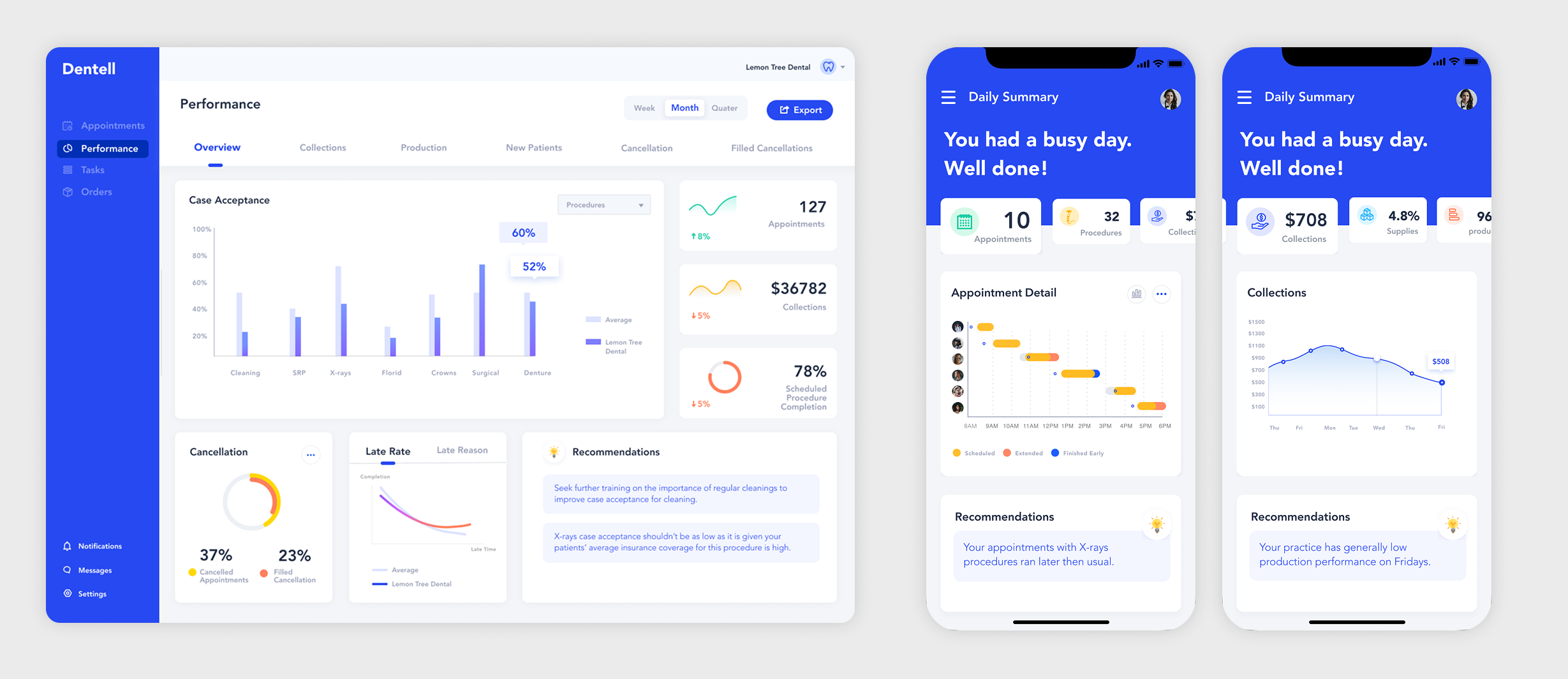
A unified workspace supporting patient care and everyday clinical operations.
Healthcare professionals
need information
without losing focus.
Dentists make decisions while working with patients, reviewing medical history, scheduling future care, and managing their practice.
The challenge was not reducing information.
It was organizing it so the most important details always remained easy to find.
Supporting an entire clinical workflow within one compact application.
Dentists constantly move between patient history, treatment notes, appointments, imaging software, financial information, and future planning.
Dentell needed to bring these different tasks together without becoming visually overwhelming.
The interface also needed to remain compact enough to coexist with other software already running on the desktop.
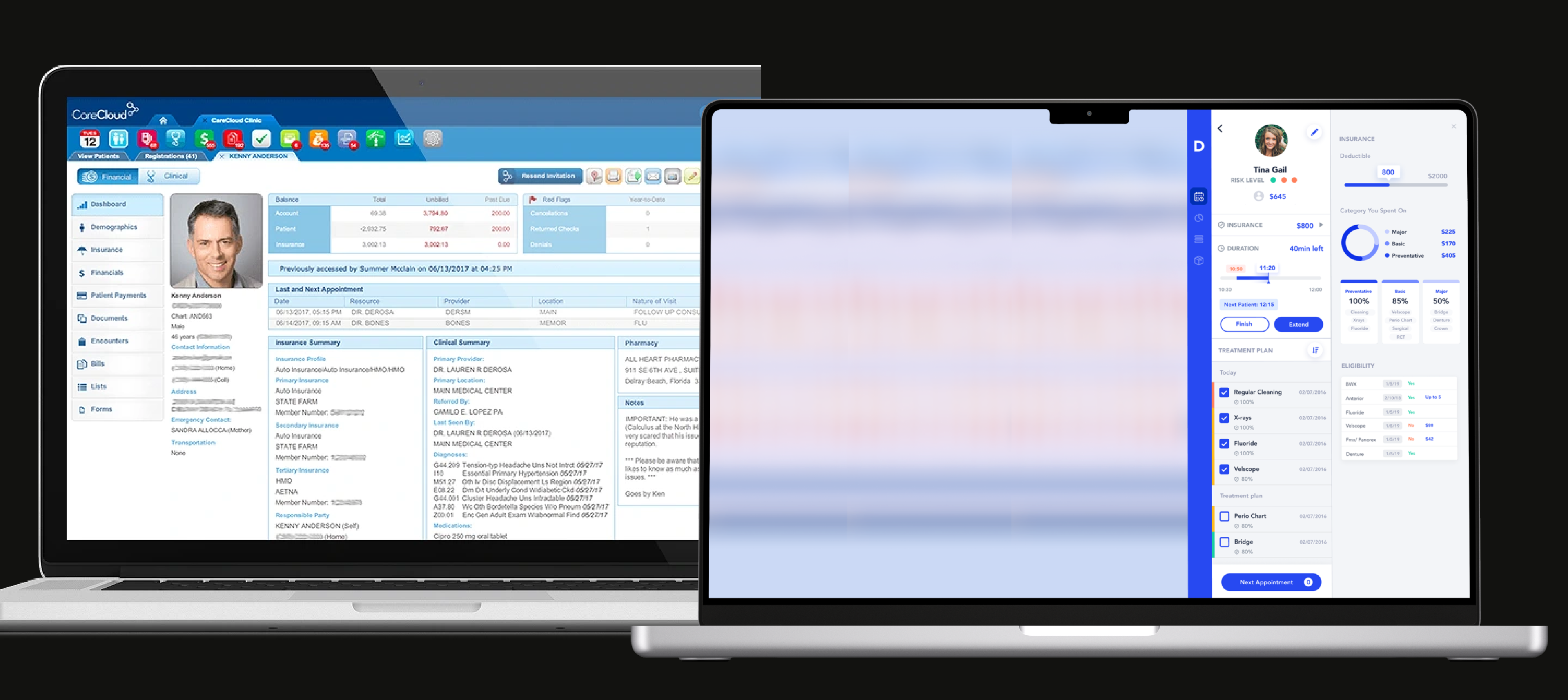
Designed to work alongside existing clinical software rather than replace the desktop.
Turning clinical expertise into a digital product.
The founder understood exactly how dentists worked and what information they needed throughout the day.
My role was translating those workflows into a clear information architecture, intuitive interactions, and a cohesive desktop and mobile experience.
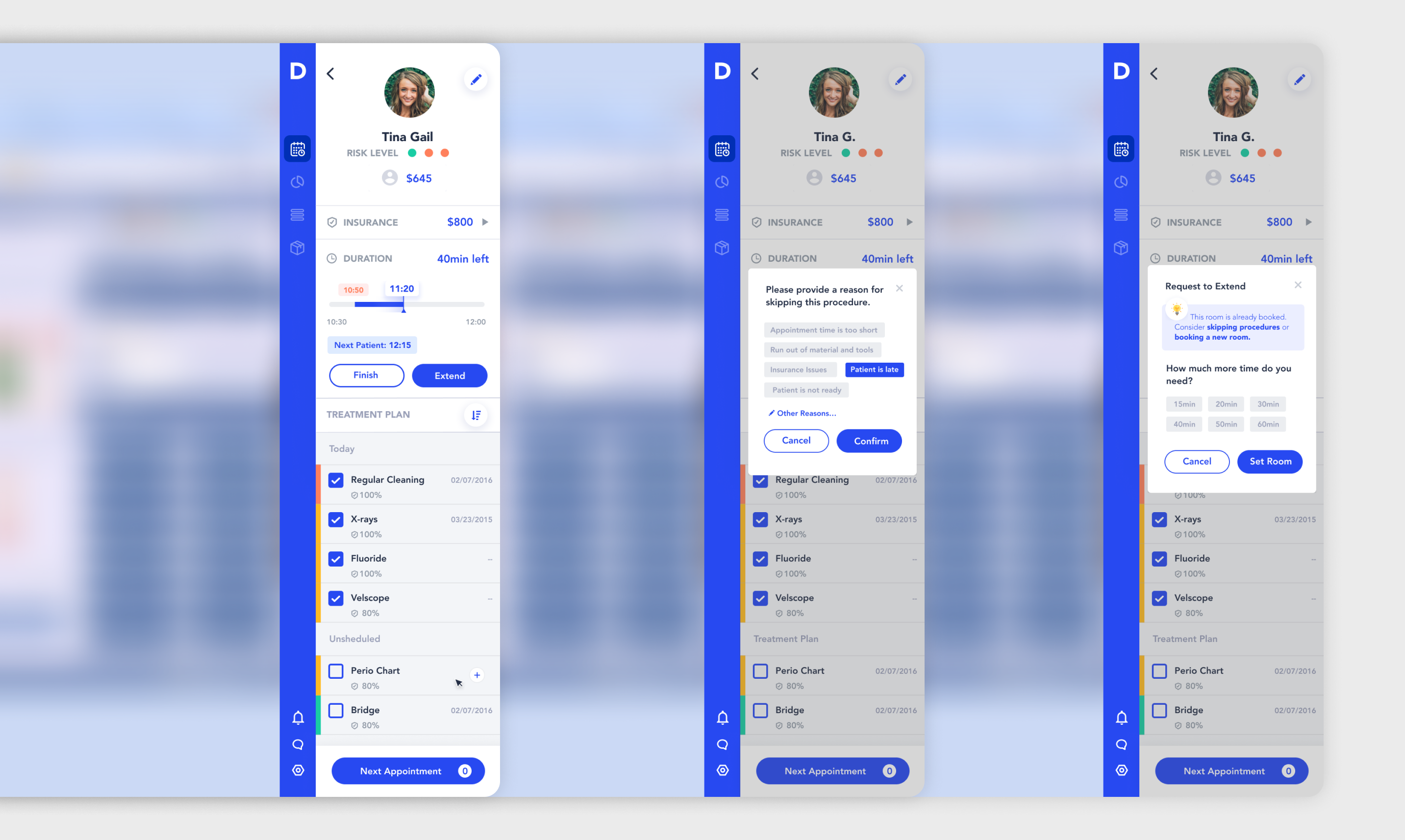
Every patient needed a clear starting point.
The patient overview became the central workspace of the application. Rather than forcing dentists to navigate multiple disconnected screens, the interface grouped the patient's current condition, essential details, and next actions into one easily scannable layout.
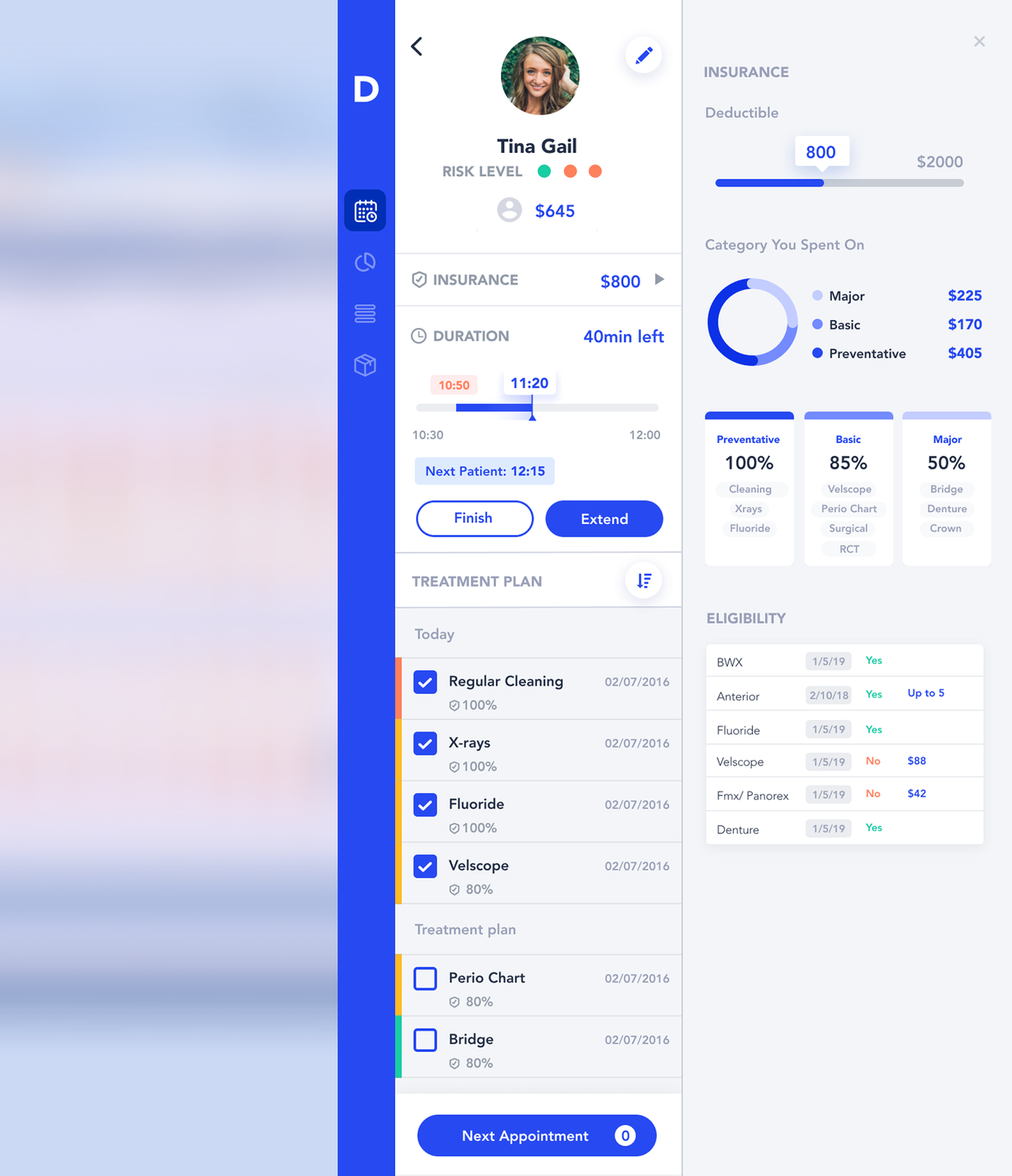
Patient information organized around everyday clinical decisions.
Appointments remained connected to patient care.
Connecting today's treatment with tomorrow's care.
Scheduling was designed as a continuation of the patient's workflow rather than a separate administrative feature.
Dentists could review a patient's current condition and immediately schedule the next appointment without losing context.
Making personal performance visible.
The platform also helped dentists monitor their individual practice performance. Revenue progress, completed work, and remaining appointments were presented as operational information supporting everyday planning rather than standalone financial reports.
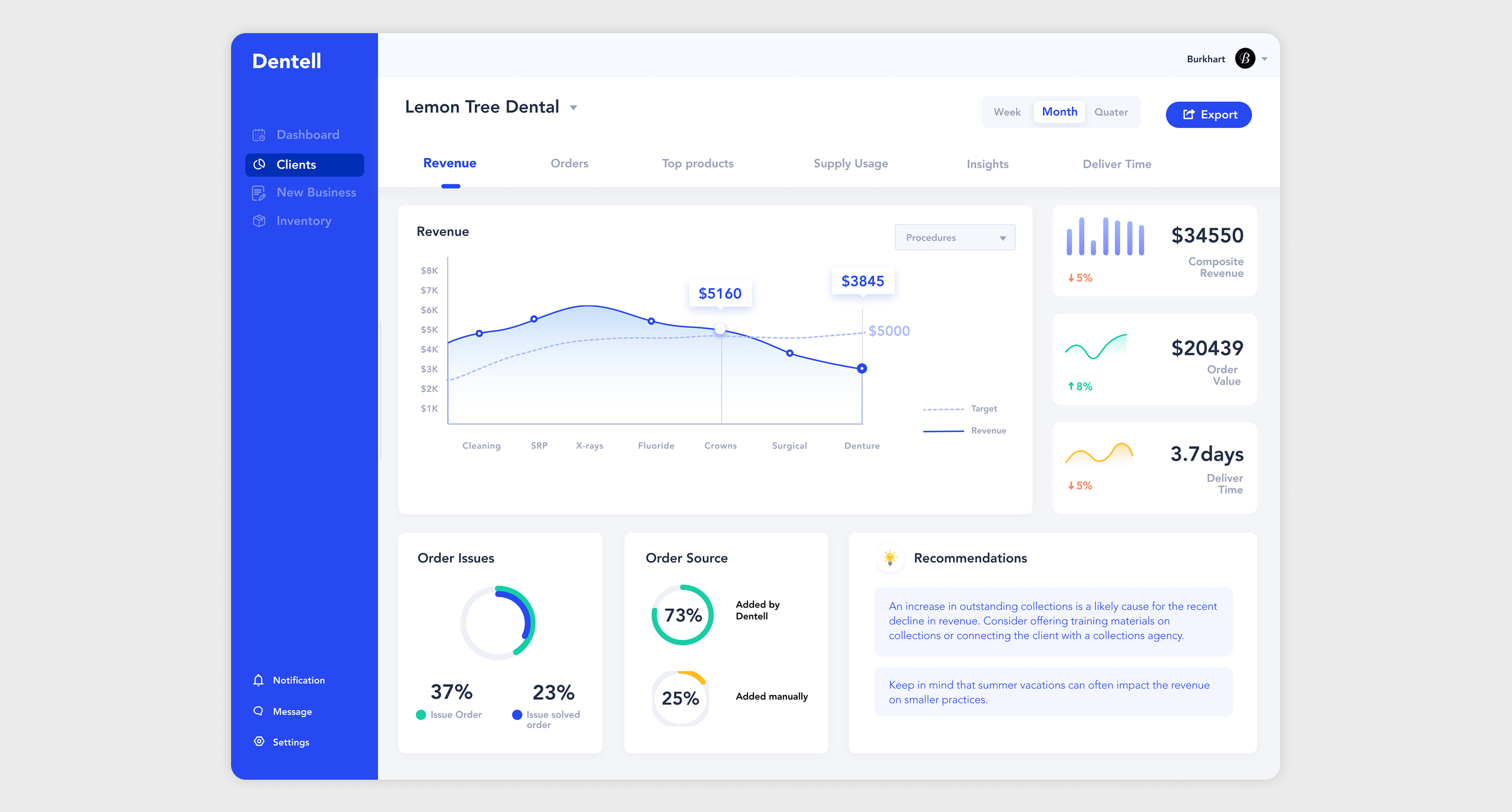
Operational metrics integrated into the professional workflow.
Essential information available anywhere.
The mobile application provided quick access to appointments, patient information, and essential practice data.
Instead of reproducing the entire desktop interface, the mobile experience focused on the information professionals needed while away from their workstation.
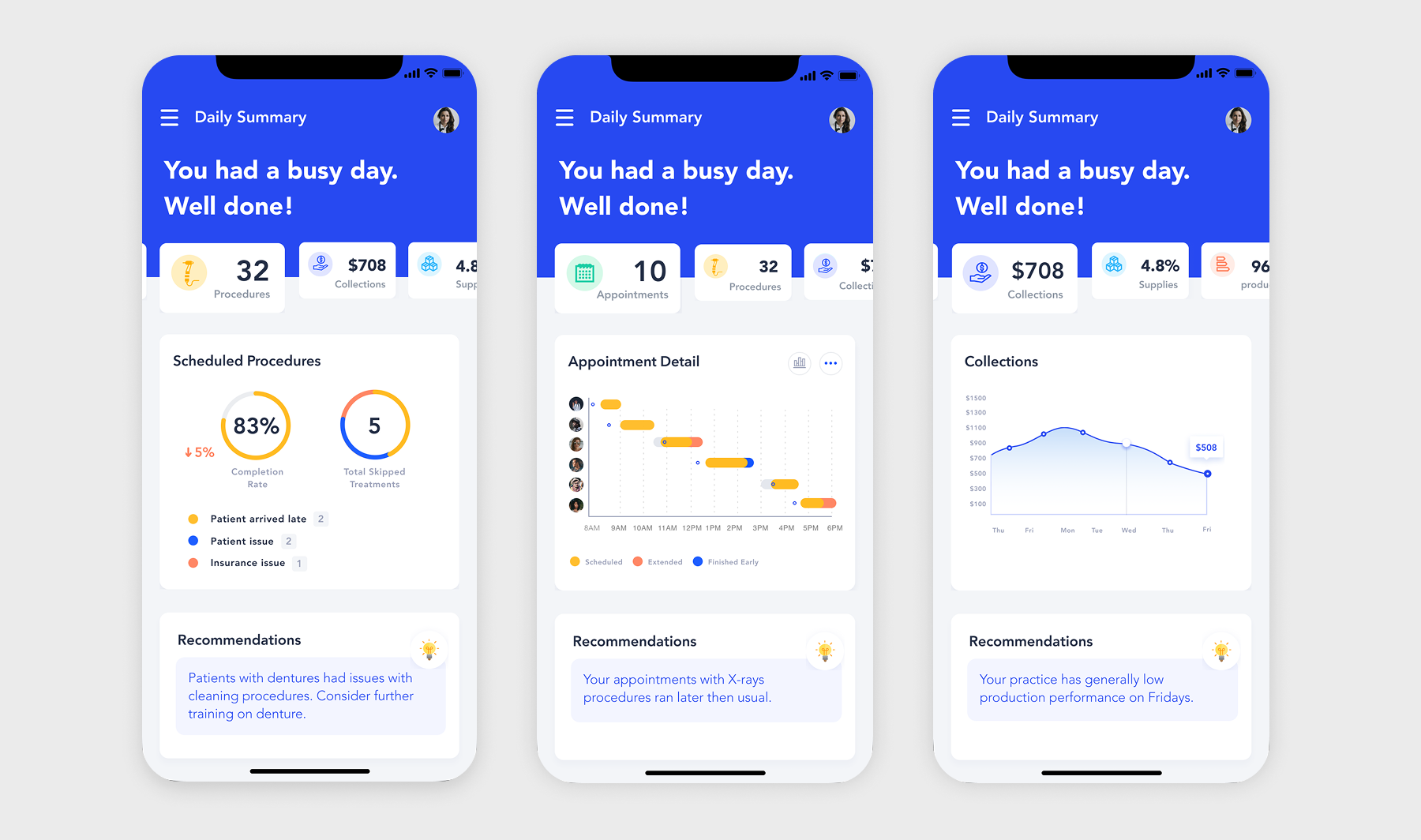
A companion experience designed around mobility.
Principles that shaped the experience
Prioritize the current patient.
The active patient and their immediate care context remained the center of the workspace.
Keep the workspace compact.
The desktop experience was designed to coexist with other clinical software.
Separate overview from detail.
Essential information stayed scannable while deeper records remained accessible.
Connect care with scheduling.
Future appointments continued the patient workflow instead of interrupting it.
Support professionals without slowing them down.
Hierarchy and predictable patterns made dense information easier to navigate.
A connected experience across clinical and operational work.
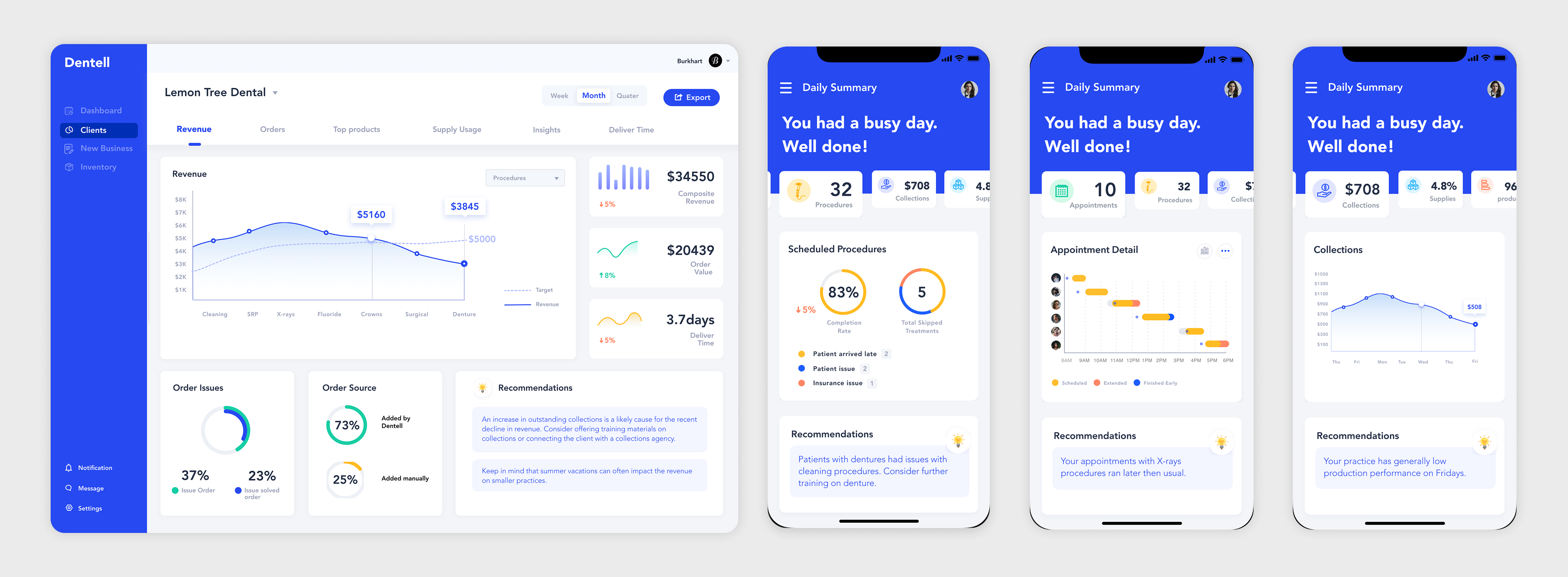
Patient overview — essential information and next actions shared one clear starting point.
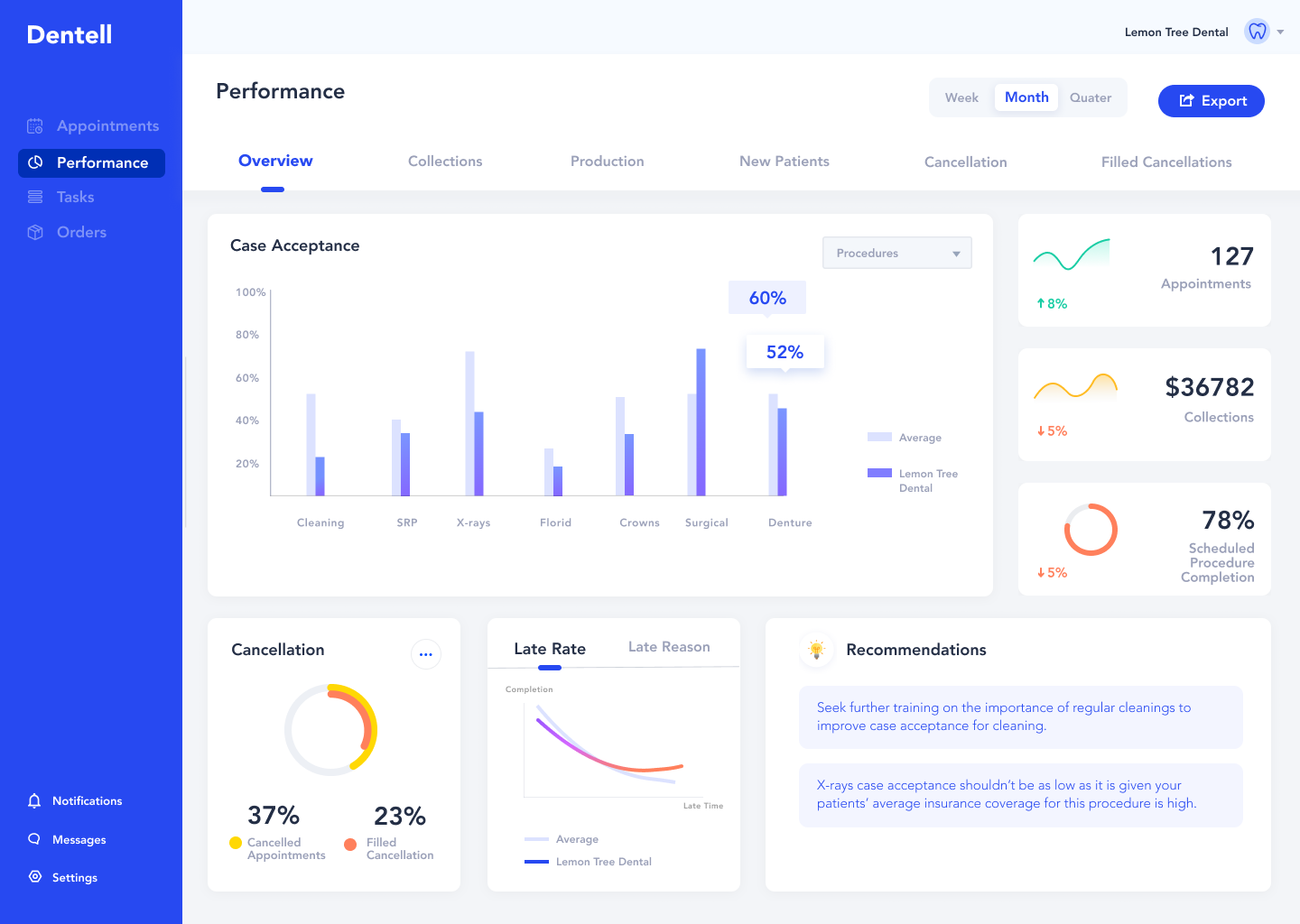
Performance dashboard — everyday operational information stayed compact and actionable.
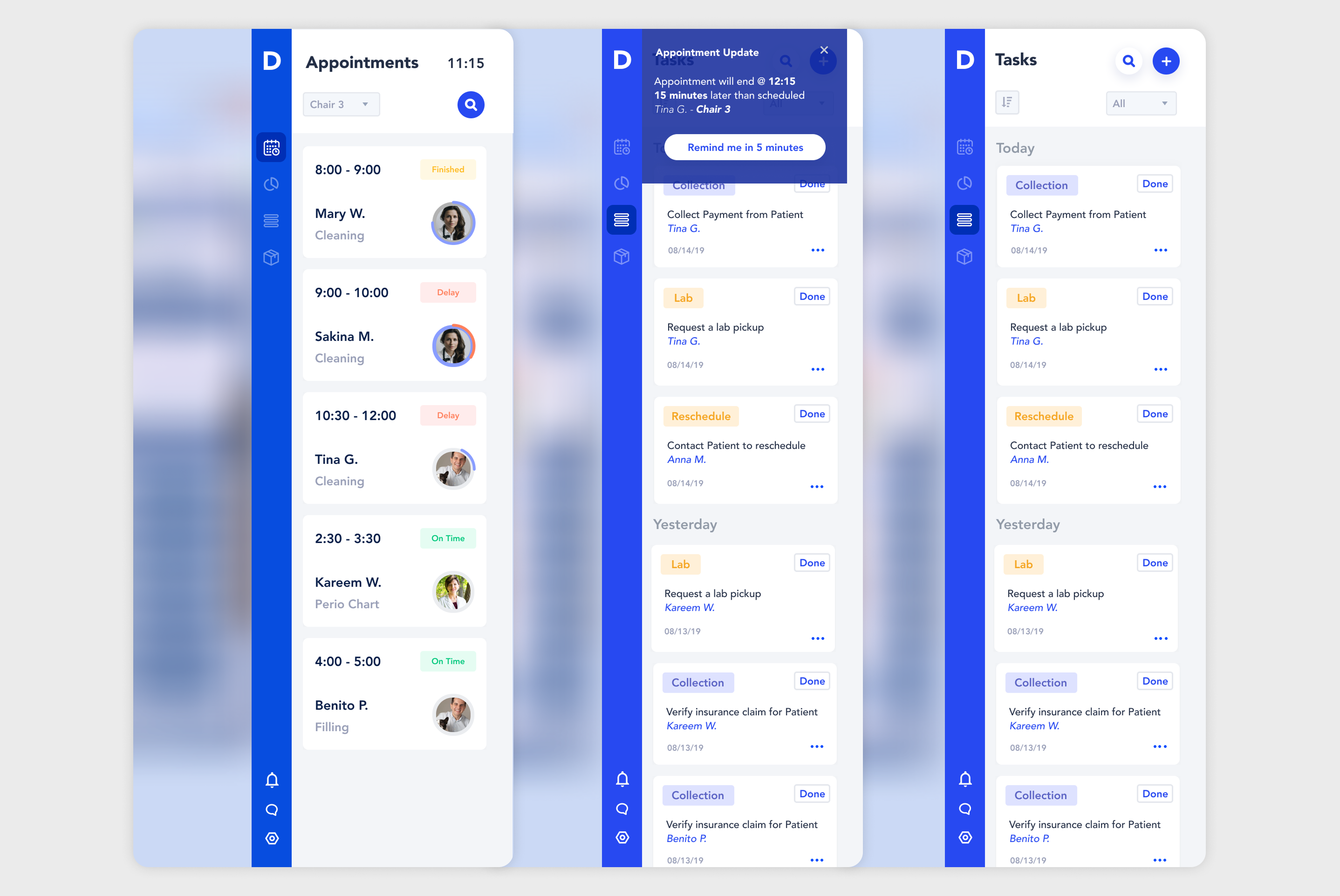
Mobile interface — only the most relevant away-from-desk information was carried over.
A connected workspace for everyday dental practice.
Dentell transformed a founder's clinical expertise into a complete cross-platform product experience.
The final design connected patient records, medical history, appointments, and practice performance within one coherent workflow designed around the realities of professional healthcare.
Designing with a domain expert.
Dentell reinforced the importance of collaborating closely with subject-matter experts.
The founder deeply understood clinical practice. My role was transforming that knowledge into a product that felt structured, intuitive, and practical for everyday work.
The project demonstrated that successful healthcare software depends as much on information architecture and workflow design as it does on visual design.
Enterprise Voice Assistant
Designing human-AI interaction years before conversational AI became mainstream.