Cartsy AI
Turning grocery lists, local deals, and multiple stores into one actionable shopping plan.
Cartsy AI was an early-stage mobile product designed to simplify weekly grocery planning across multiple local retailers.
Users could build a grocery list manually or through voice input. The product then connected requested items with relevant local discounts and coupons, organized purchases by store, and generated a suggested shopping plan showing where to buy each item and the estimated savings.
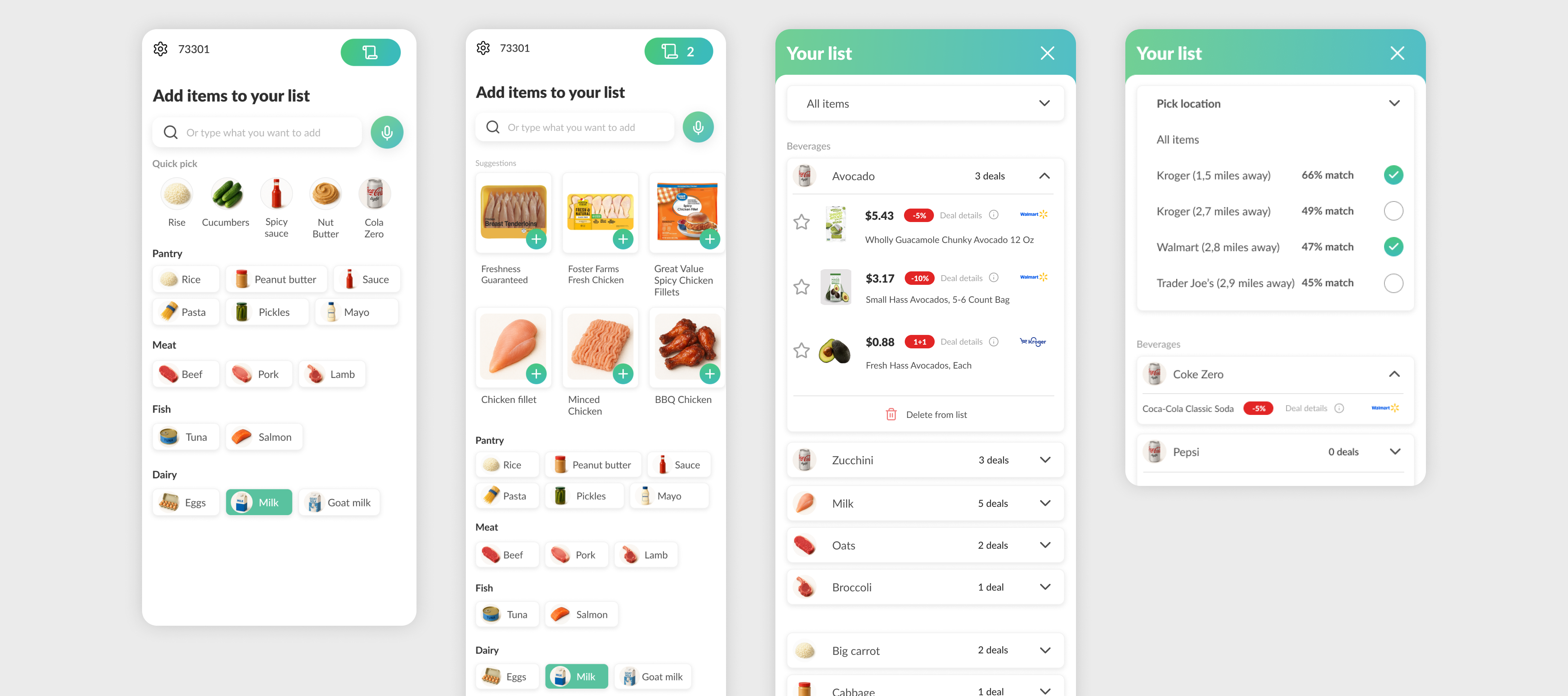
A mobile experience connecting grocery intent, local offers, and a practical shopping plan.
A shopping list
tells people
what they need.
It does not tell them
the best way
to buy it.
Grocery shopping across several retailers requires more than remembering products. Shoppers may need to compare weekly promotions, coupons, prices, store locations, and the effort involved in making additional stops.
Cartsy AI was designed to turn those fragmented decisions into a recommendation that felt understandable and ready to follow.
The information existed, but it was scattered across stores, apps, and weekly promotions.
In many American towns, shoppers have access to several nearby grocery retailers. Each store may offer different discounts, coupons, loyalty promotions, and temporary price reductions.
Finding the most relevant offers manually can require checking multiple store applications, comparing products, and deciding whether the potential savings justify visiting another location.
A traditional grocery list captures what someone needs to buy, but it does not help answer three practical questions:
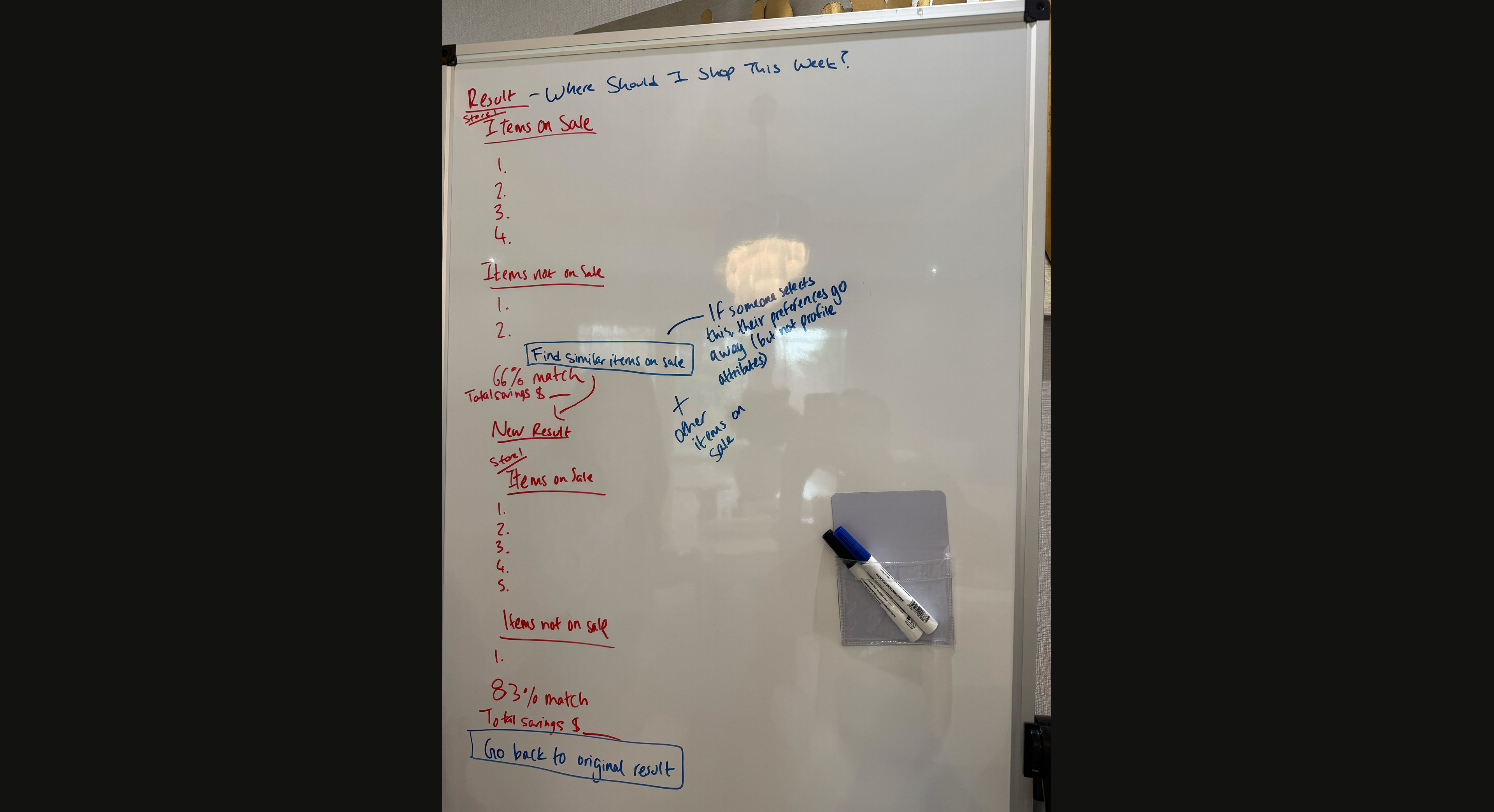
Connecting shopping intent with changing retail information.
Translating an early-stage idea into a complete mobile product workflow.
I designed the initial Cartsy AI experience from the ground up, turning the startup concept into a coherent product structure, core user flows, AI-assisted interactions, and final mobile interfaces.
From an evolving weekly list to a day-of-shopping plan.
Grocery planning rarely happens in one moment. People remember products throughout the week and complete the actual shopping later. Cartsy AI supported that natural pattern: users could add products whenever they remembered them and generate a suggested shopping plan when they were ready to go shopping.
Add items throughout the week
↓Review complete grocery list
↓Match products with local deals
↓Organize purchases by retailer
↓Generate suggested shopping plan
↓Review estimated savings
↓Go shopping
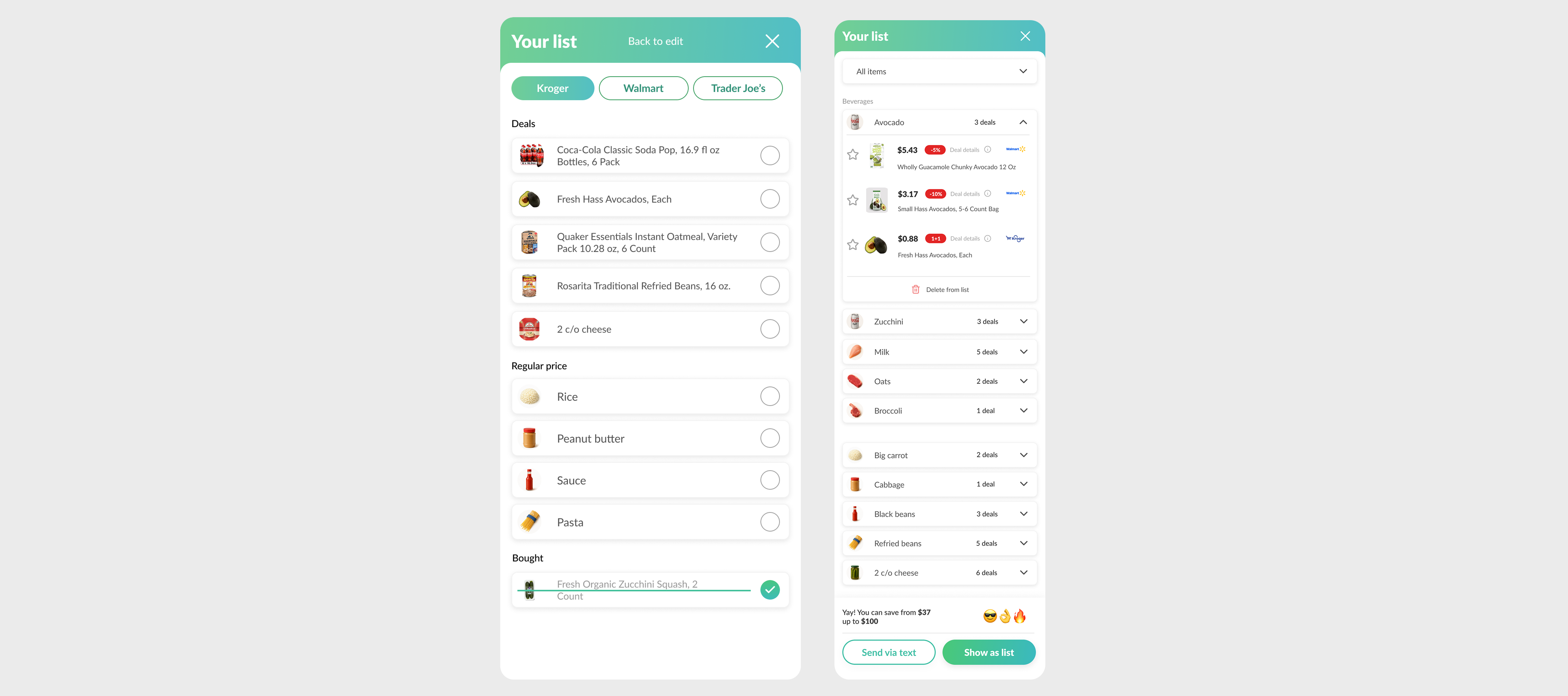
The grocery list became the foundation for every later recommendation.
Adding groceries should feel effortless.
Users could type products manually or dictate them through voice input.
The experience supported everyday situations: quickly remembering a forgotten item, adding groceries while cooking, or building a complete shopping list over several days.
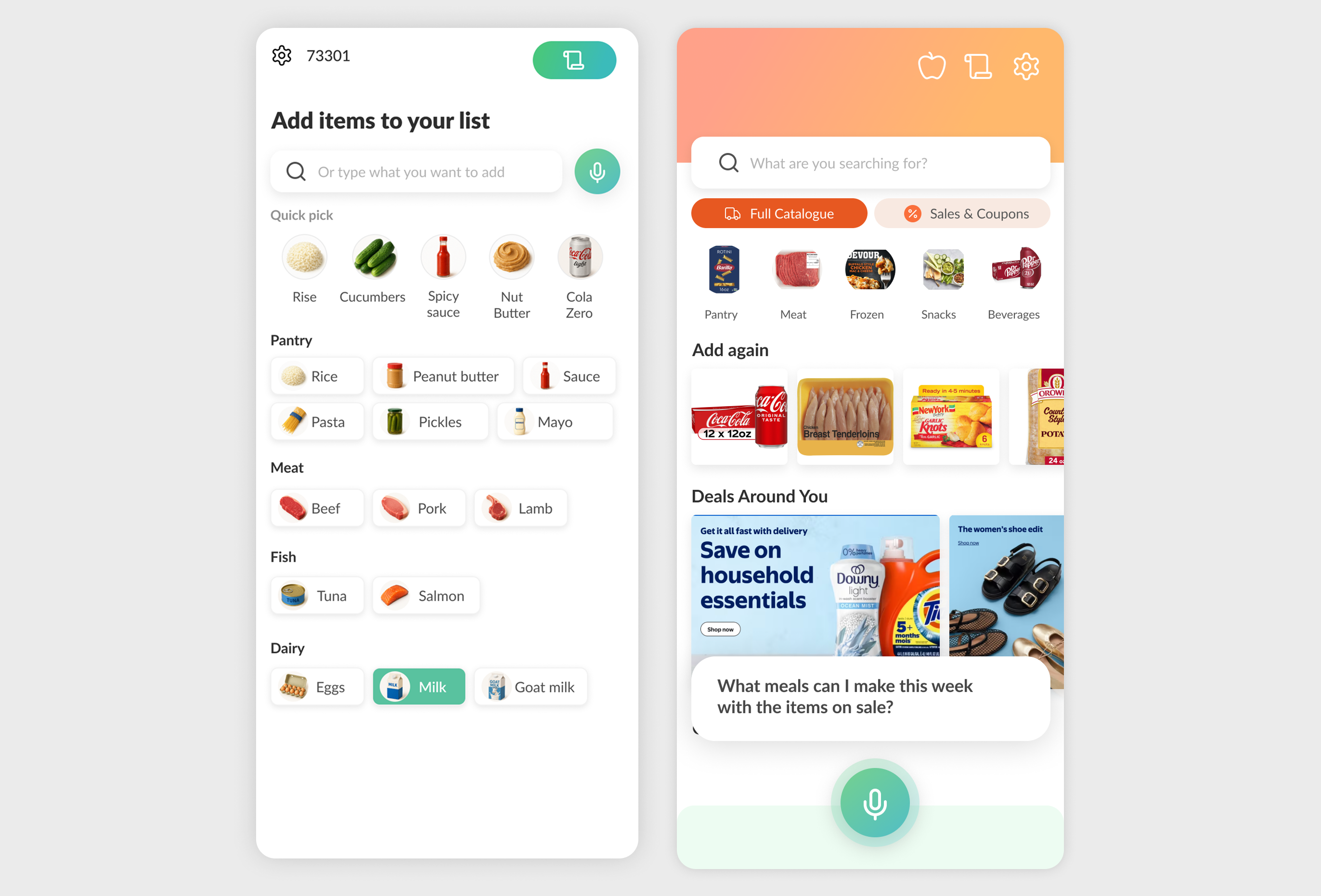
Voice and manual entry supported the same evolving weekly list.
Turning natural language into a structured grocery list.
Instead of requiring users to type every product individually, Cartsy AI transformed conversational requests into structured, editable grocery items.
The parsed results remained editable so users could adjust names, quantities, or categories before generating the final shopping plan.
AI accelerated list creation.
The user remained in control.
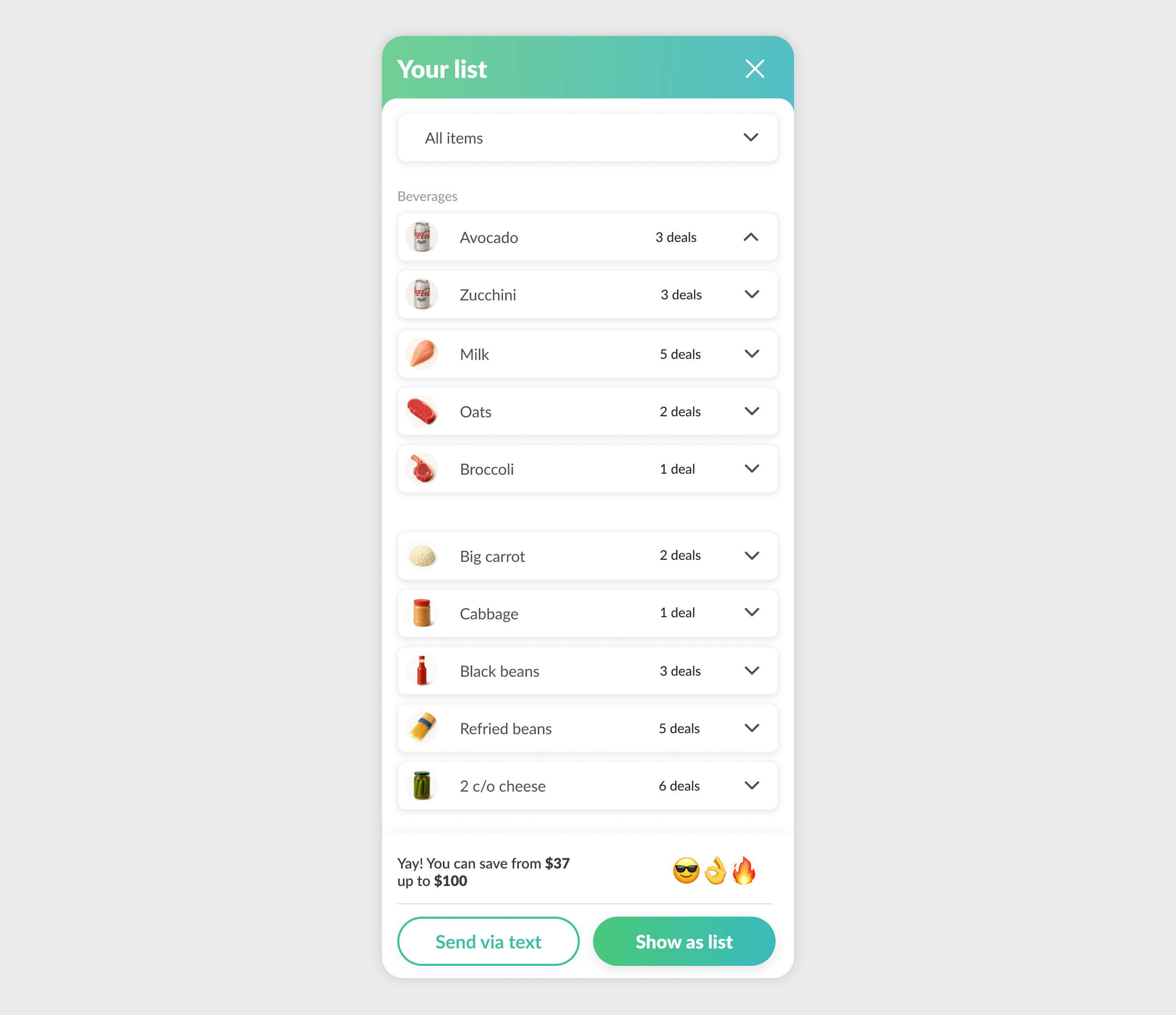
Structured output remained easy to review and correct.
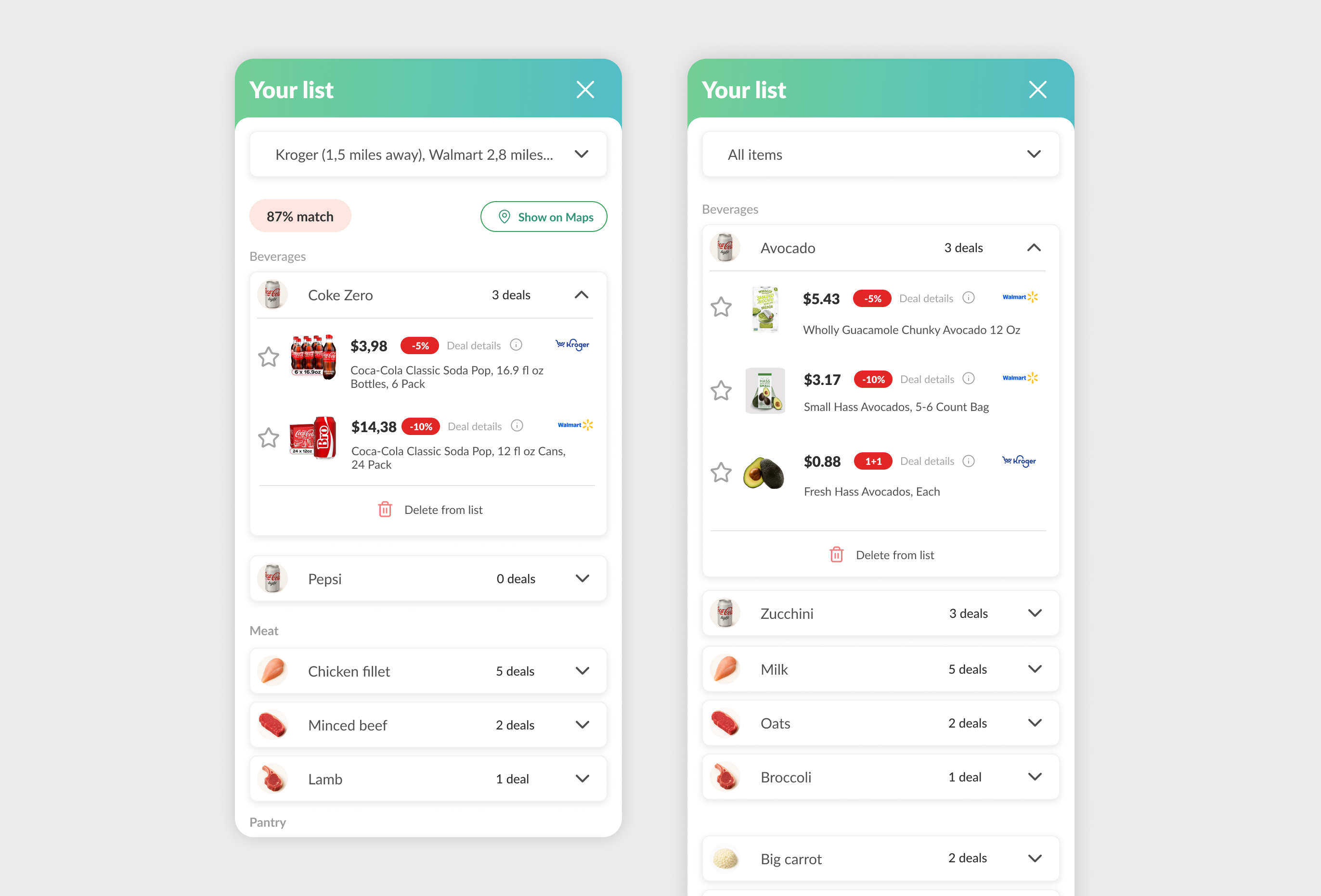
Relevant offers supported the original shopping intent.
Showing relevant discounts without overwhelming the user.
After the shopping list was complete, Cartsy AI connected requested products with available discounts, coupons, and promotions from nearby stores.
The experience prioritized offers related to products the user already intended to purchase rather than distracting them with unrelated promotions.
Helping users understand where each purchase made the most sense.
Different retailers often offered different prices and promotions. Instead of presenting isolated advertisements, Cartsy AI organized available offers into a comparison that helped users understand how each store contributed to the overall shopping plan.
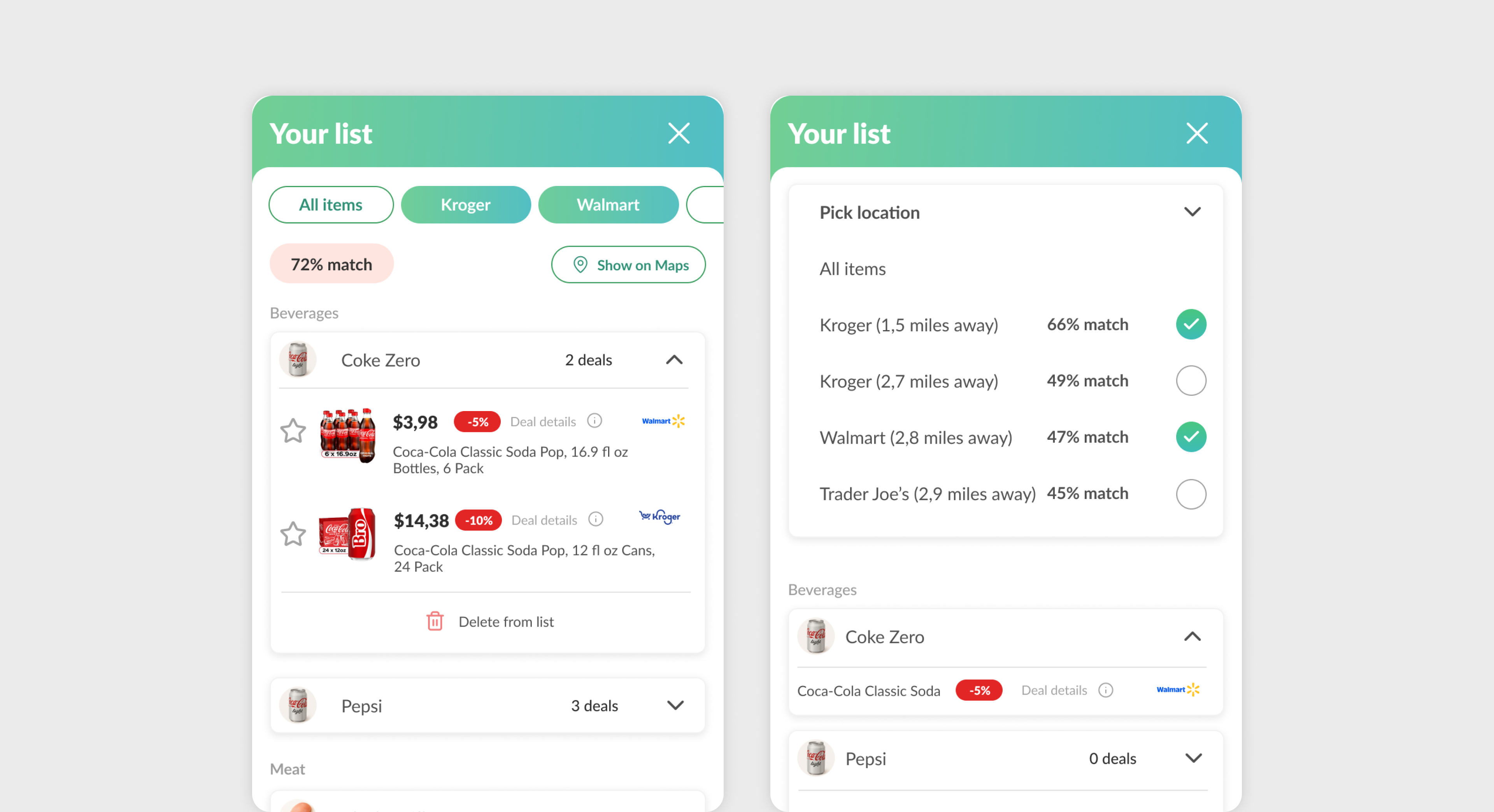
Store comparison focused on decisions rather than advertisements.
Helping users understand why the recommendation mattered.
Savings were presented transparently at both the item and trip level.
Rather than displaying a single total, the interface explained where savings came from and how each promotion contributed to the final estimate.
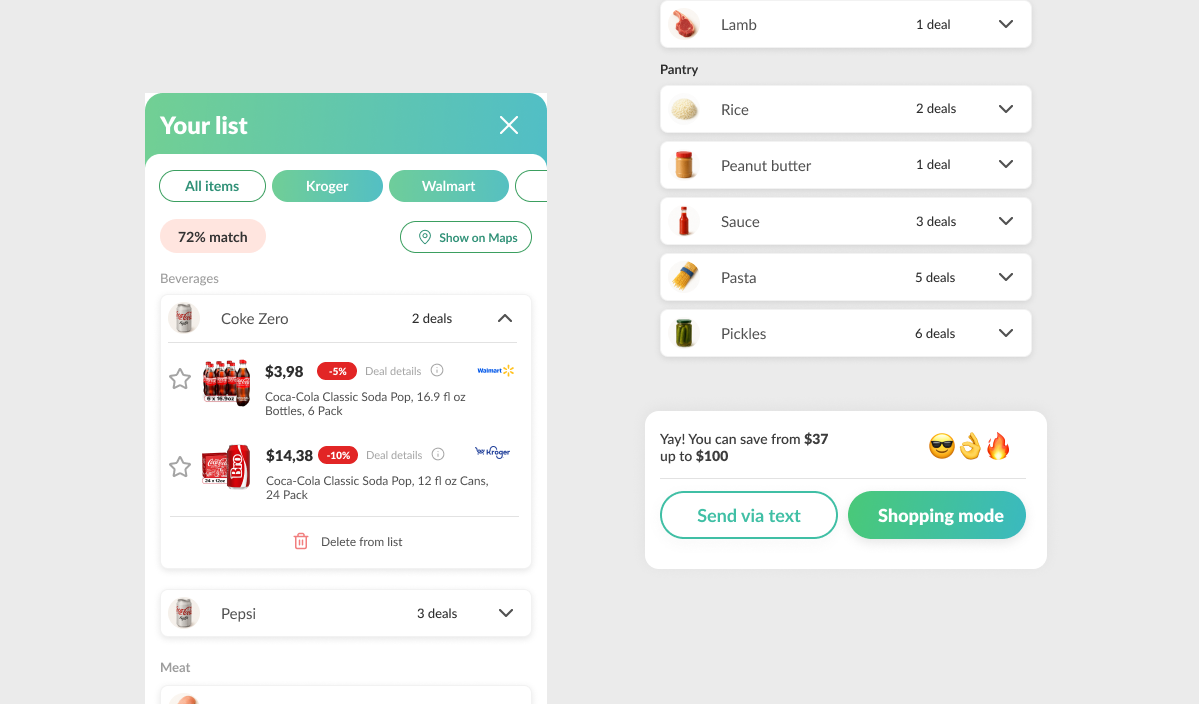
Estimated savings were explained instead of presented as an unexplained total.
Principles that shaped the experience
Start with user intention.
Recommendations began with products the user already intended to purchase.
Keep AI editable.
AI-assisted results remained reviewable and adjustable.
Turn information into action.
Deals became part of a practical shopping plan rather than another feed.
Balance savings with effort.
The experience presented estimated value alongside the reality of visiting multiple stores.
Explain every recommendation.
Offer and savings information stayed visible at the relevant decision point.
Turning grocery planning into one connected experience.
Cartsy AI translated an early-stage startup idea into a complete mobile product experience. The design connected grocery-list creation, voice input, local deal discovery, store comparison, shopping planning, and estimated savings within one coherent workflow.
Designing AI for everyday decisions.
Cartsy AI demonstrated that the value of AI is not simply presenting more information.
People already have access to grocery lists, store apps, prices, coupons, and weekly promotions.
The design challenge was organizing all of that fragmented information around one practical question: Where should I shop today?
The strongest part of the experience was helping users move naturally from intention to action while keeping every recommendation understandable and under their control.
Dentell
Designing a desktop and mobile workspace for dental professionals.