BetterYou
Designing continuity between AI-assisted therapy, patients, and mental health professionals.
BetterYou is a hybrid mental health platform that combines AI-assisted therapeutic conversations with sessions led by mental health professionals. The product was designed to make ongoing support more accessible while helping professionals understand patient history, prepare for sessions, and follow progress over time.
In mental health,
trust is part
of the interface.
Mental health products operate in an emotionally sensitive context. The experience needed to feel calm and understandable while supporting two very different users: patients seeking help and professionals managing long-term care.
Creating one continuous experience across AI and human care.
Therapy is longitudinal, but digital mental health experiences are often fragmented. Conversations, appointments, notes, and patient history may exist in separate places, making it difficult to maintain context between sessions.
BetterYou needed to connect AI-assisted conversations, professional sessions, scheduling, session records, and patient progress within one coherent product ecosystem.
Translating a complex service into two connected product experiences.
I designed key parts of both the patient and professional experiences, with a focus on AI conversations, session continuity, information architecture, professional preparation, scheduling, and progress tracking.
Two experiences connected by the same therapeutic history.
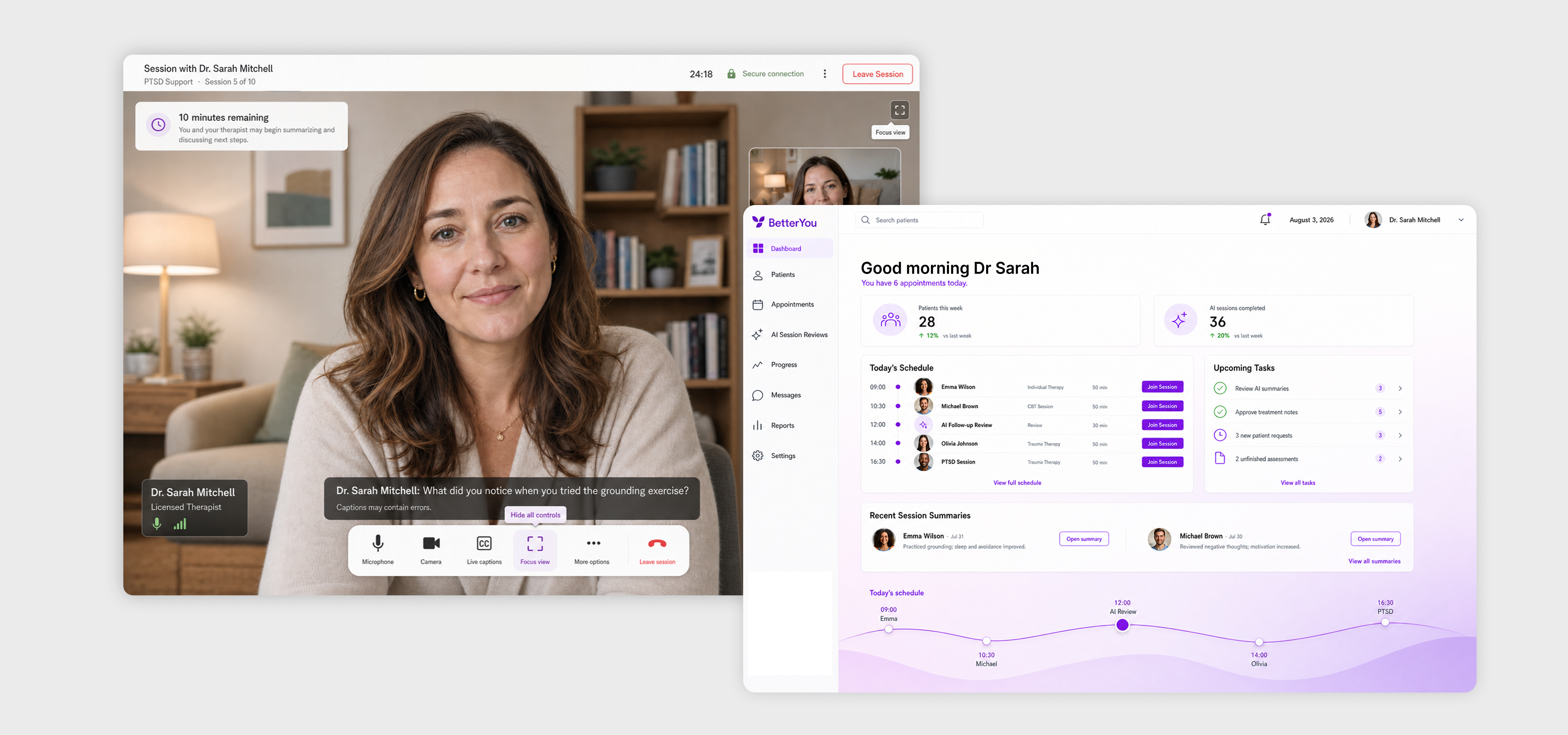
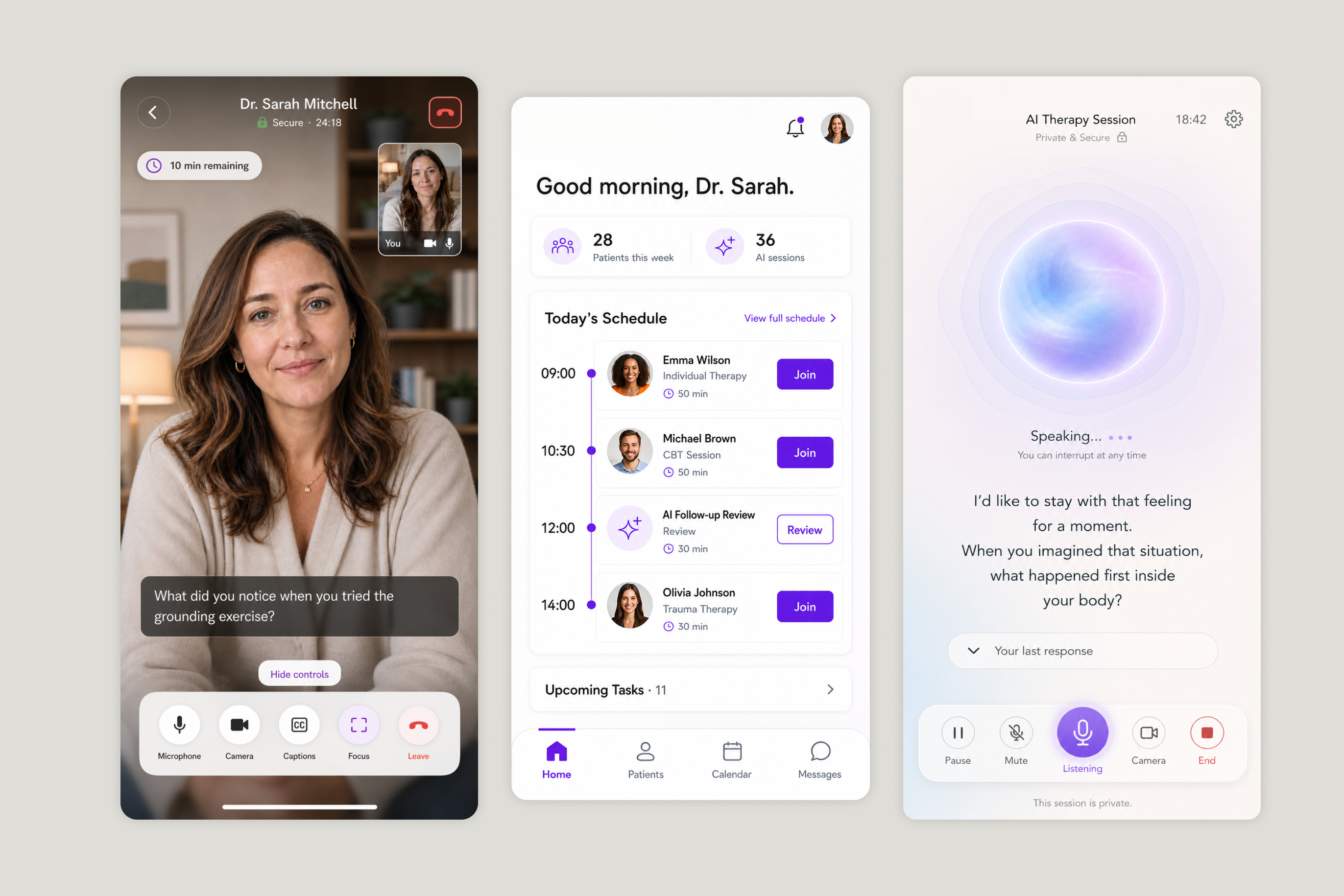
Patients could access AI-assisted sessions and book sessions with a professional. Professionals received access to patient records, upcoming appointments, previous session summaries, and longitudinal progress.
The central design challenge was ensuring that important context could move through the system without forcing professionals to review every complete conversation.
Making AI-assisted sessions feel structured, calm, and understandable.
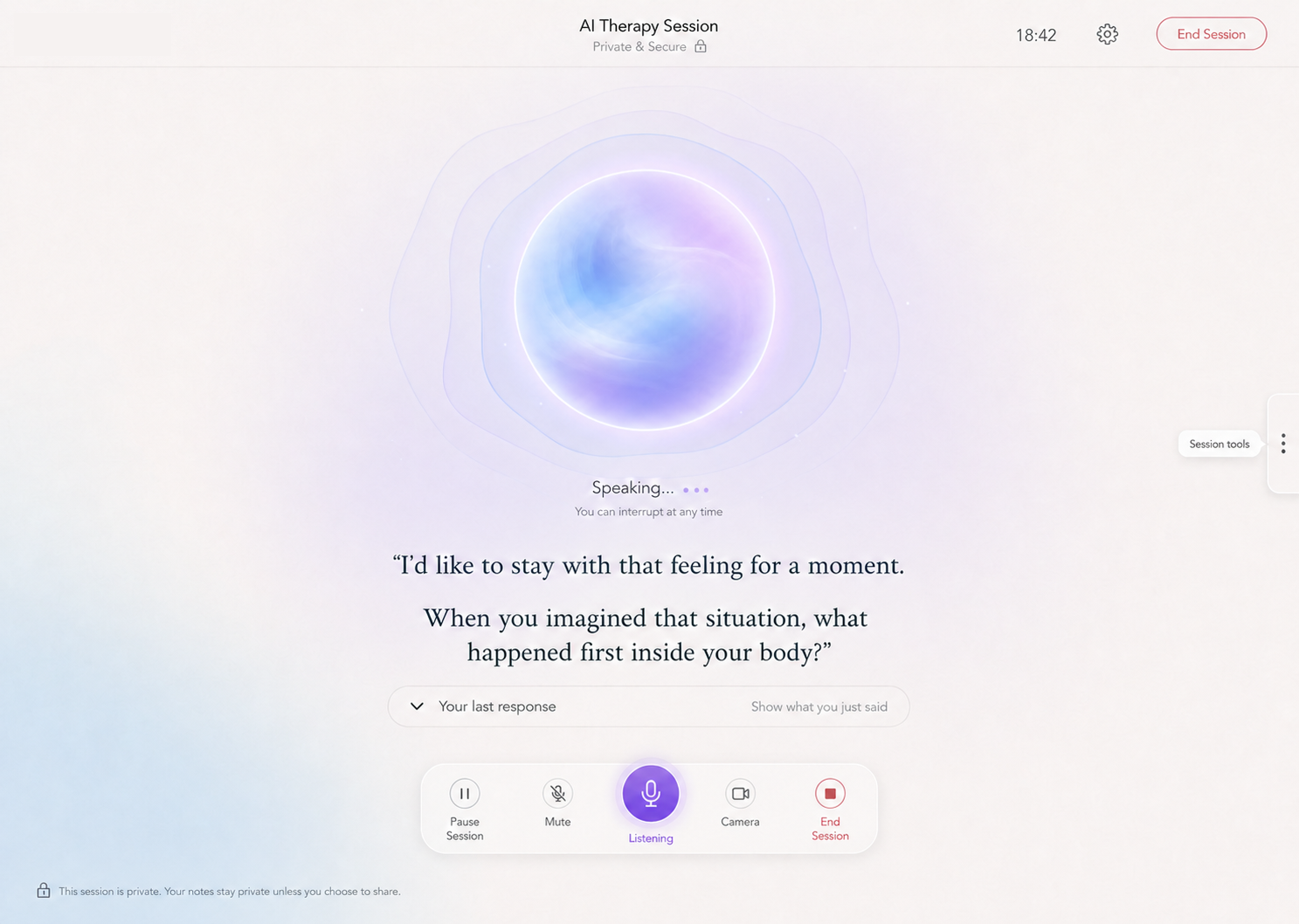
For patients, BetterYou needed to feel less like a generic chatbot and more like a guided therapeutic environment. The interface prioritized the current conversation, reduced visual noise, and made session state and available actions clear.
Patients could use AI-assisted sessions as part of a subscription experience and also schedule sessions with a mental health professional when human support was needed.
Turning parts of a conversation into a visual reflection.
During selected therapeutic exercises, the platform could generate contextual imagery based on themes or memories discussed by the patient.
The goal was not to present an AI-generated image as an objective reconstruction of the past. Instead, the visual acted as a reflective aid within the broader therapeutic experience.
The interface needed to clearly distinguish generated content from factual records or clinical information.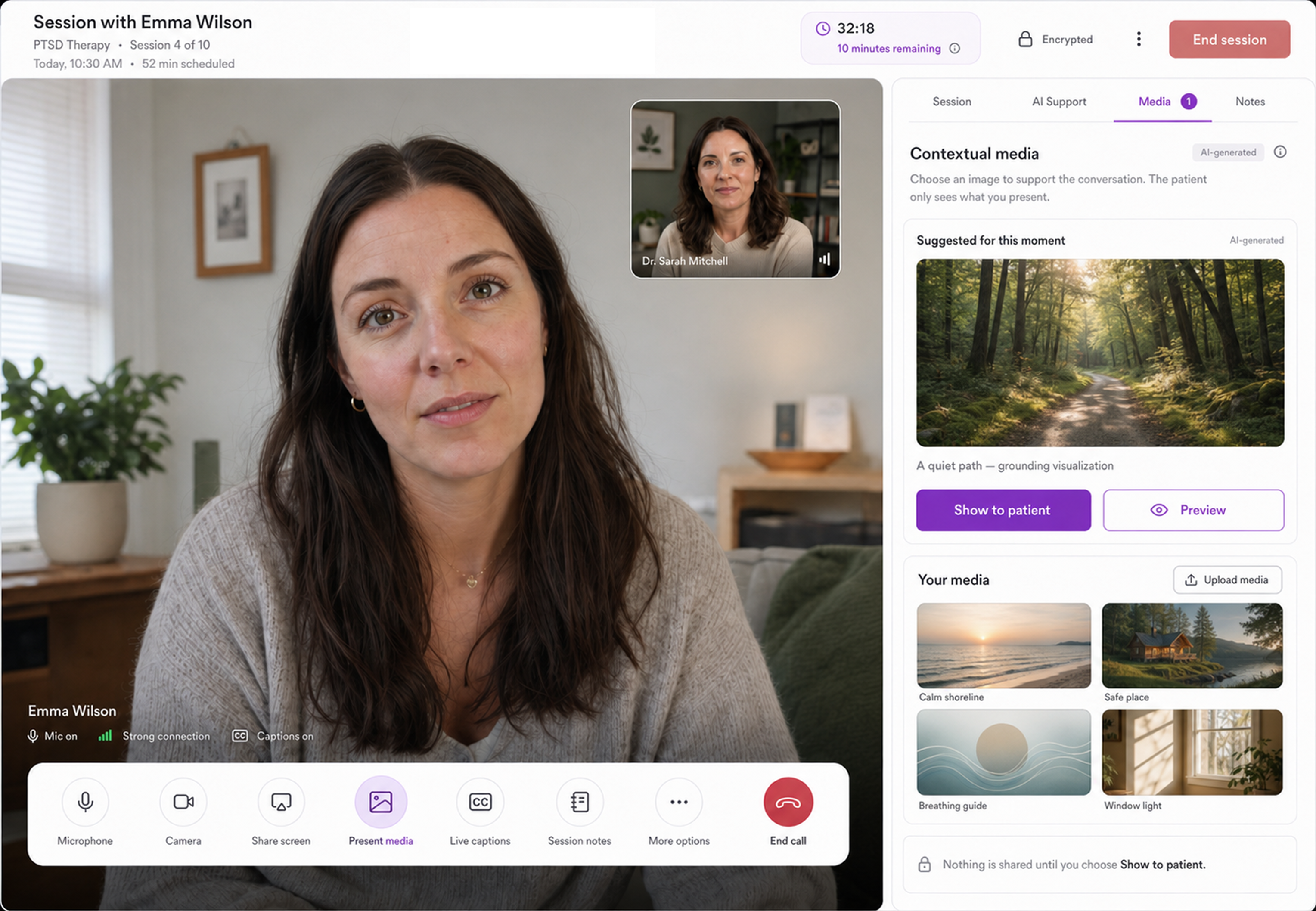
Helping professionals understand the story without rereading every word.
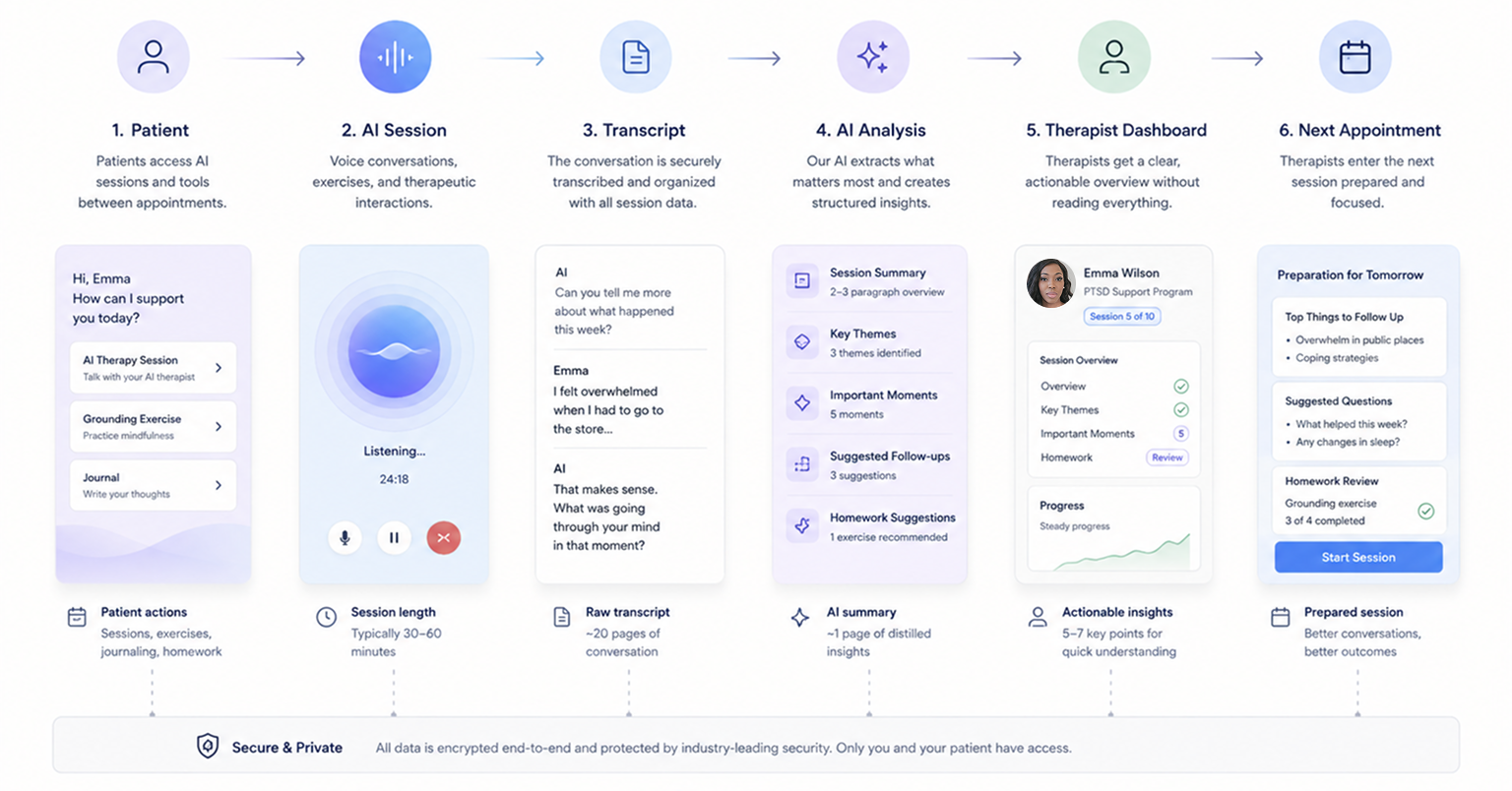
Every session could produce a structured record containing a transcript, concise summary, and key points requiring professional attention. These outputs helped professionals prepare for future sessions while preserving access to the original conversation when deeper review was necessary.
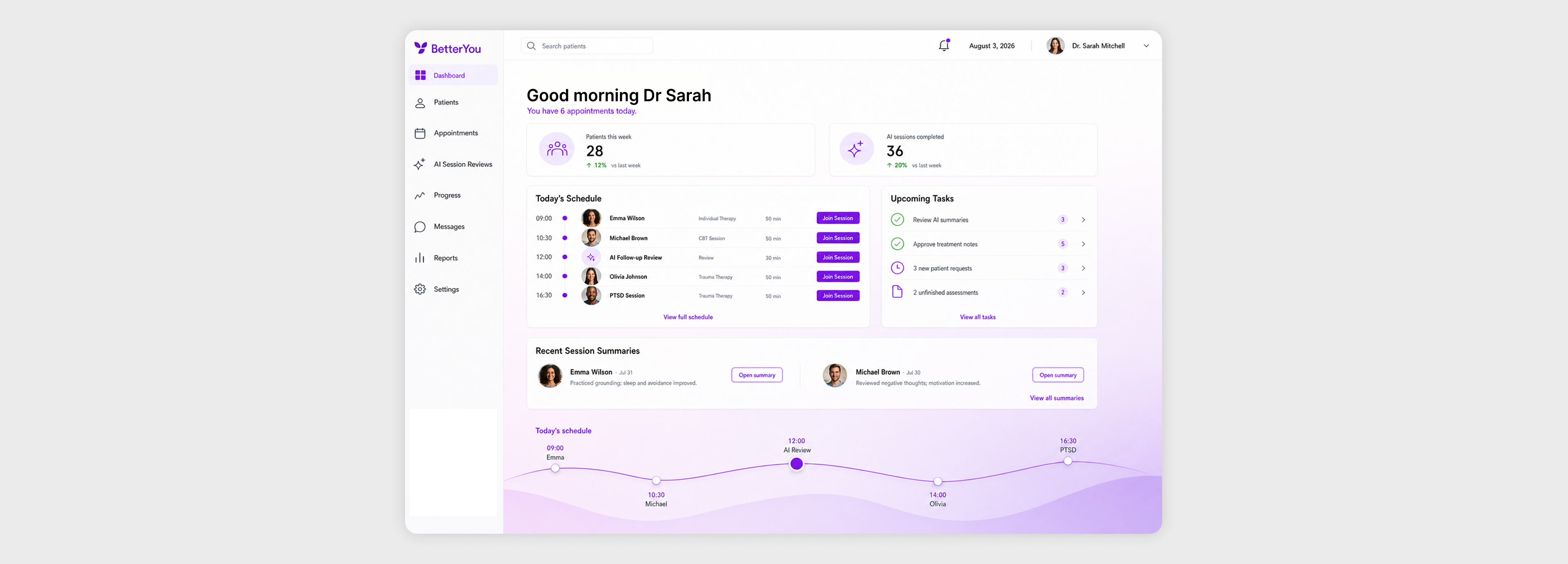
A central workspace for patient care, preparation, and scheduling.
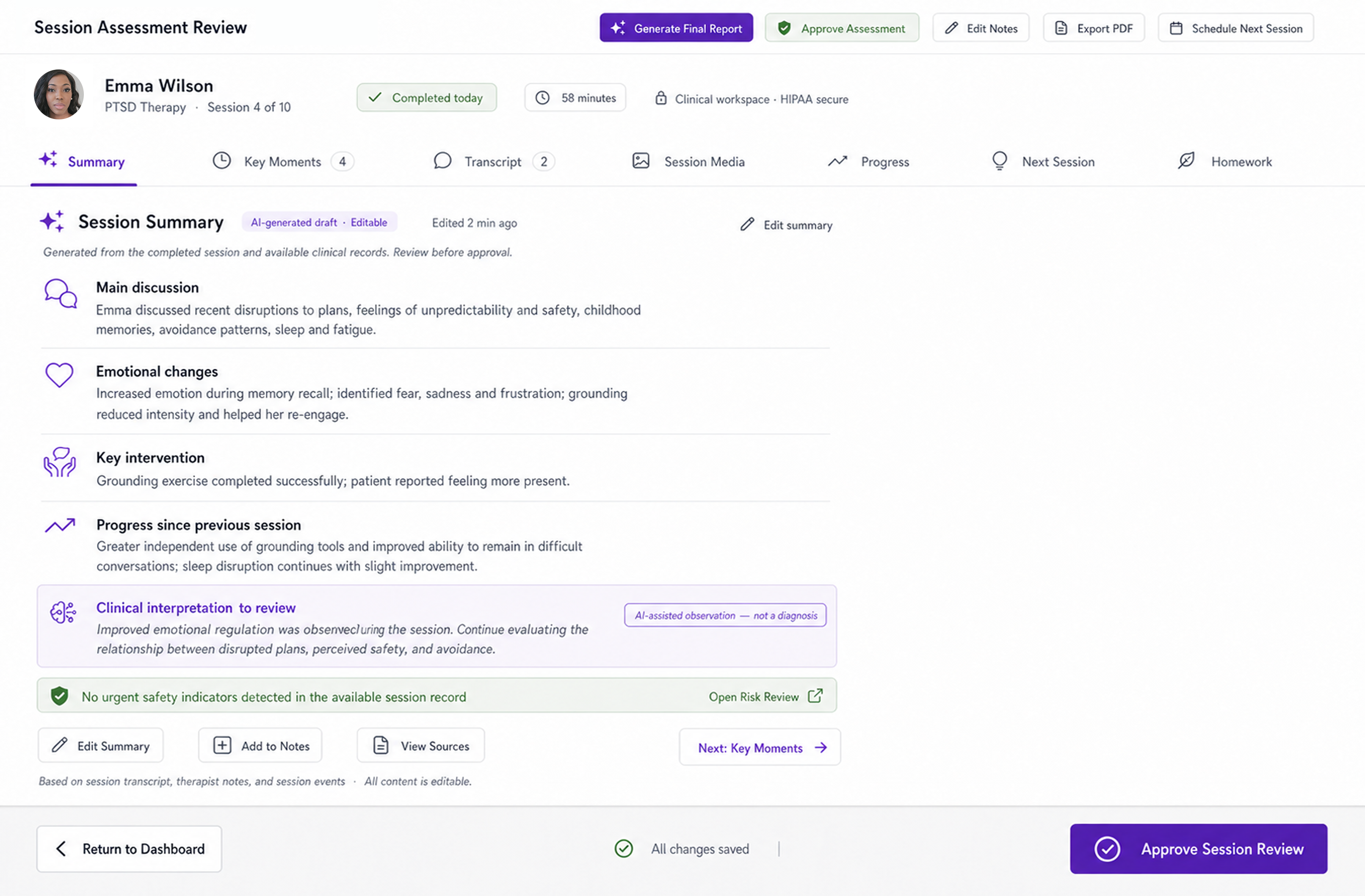
From long conversations to structured professional context.
Instead of asking professionals to read each complete transcript before an appointment, BetterYou surfaced a concise session summary and a set of relevant attention points.
The original record remained available, allowing AI-generated summaries to support professional judgment rather than replace it.
AI organized the information. The professional remained responsible for interpreting it.
Making every session build on what came before.
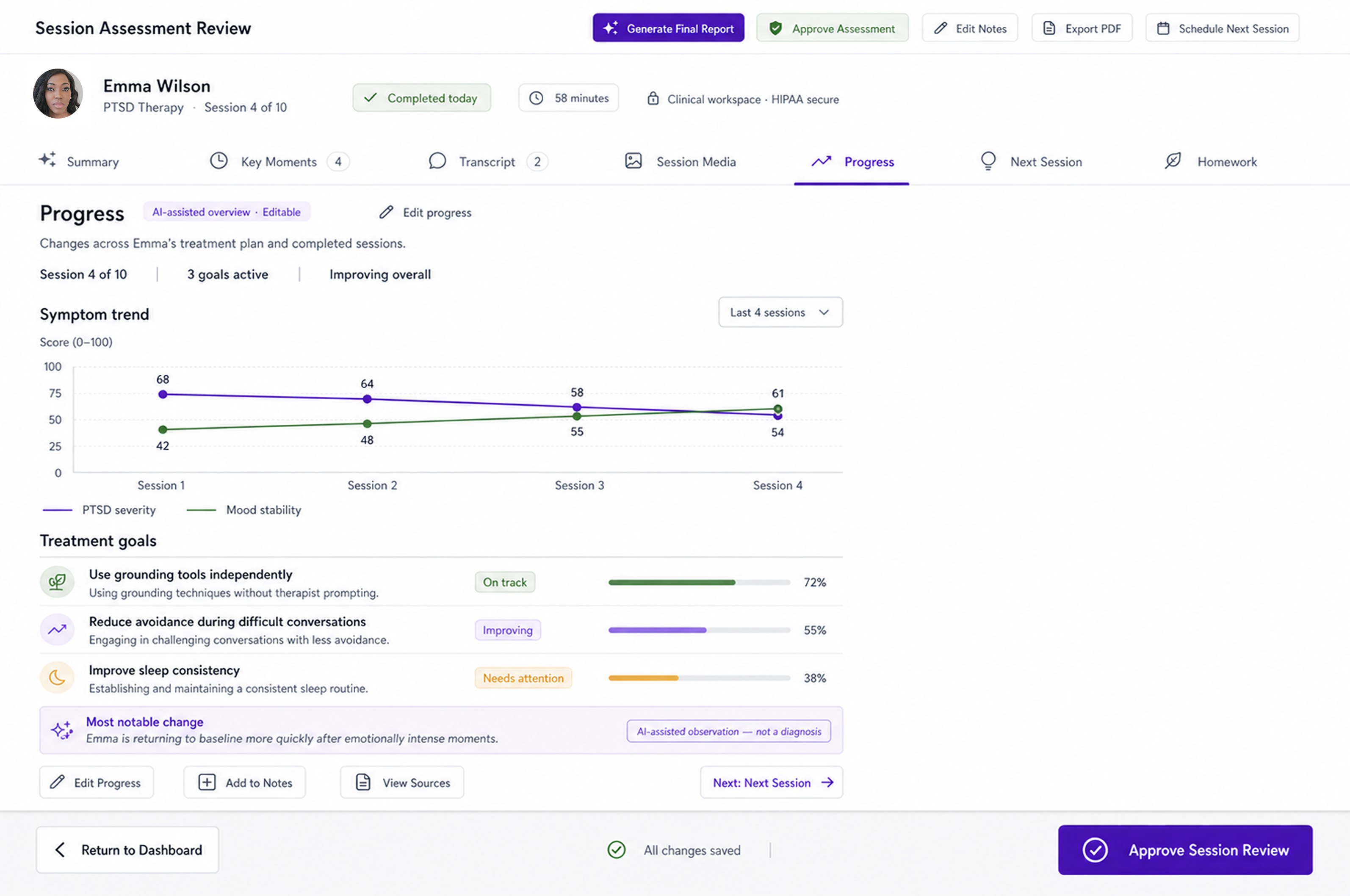
Therapeutic progress rarely belongs to a single conversation. The professional experience organized previous sessions, important themes, and changes over time into a patient history.
This helped professionals understand the broader trajectory of care, identify recurring topics, and prepare for the next session with relevant context already visible.
Support designed to remain accessible beyond the desktop.
The mobile experience prioritized the patient’s most frequent actions: beginning or continuing a session, reviewing upcoming appointments, and accessing the essential parts of their care experience.
The mobile interface retained the same calm hierarchy and clear distinction between AI-assisted and professional support.
Principles that shaped the experience
Trust before efficiency
The interface should first establish emotional clarity and safety before optimizing for speed.
AI supports professional judgment
Summaries and extracted points organize information but do not make clinical decisions.
Preserve the source
Professionals should retain access to complete session records behind generated summaries.
Design for continuity
Patient history, previous sessions, appointments, and follow-up points should feel connected.
Make human support visible
Patients should understand when and how they can access a mental health professional.
A calm visual system for sensitive interactions.
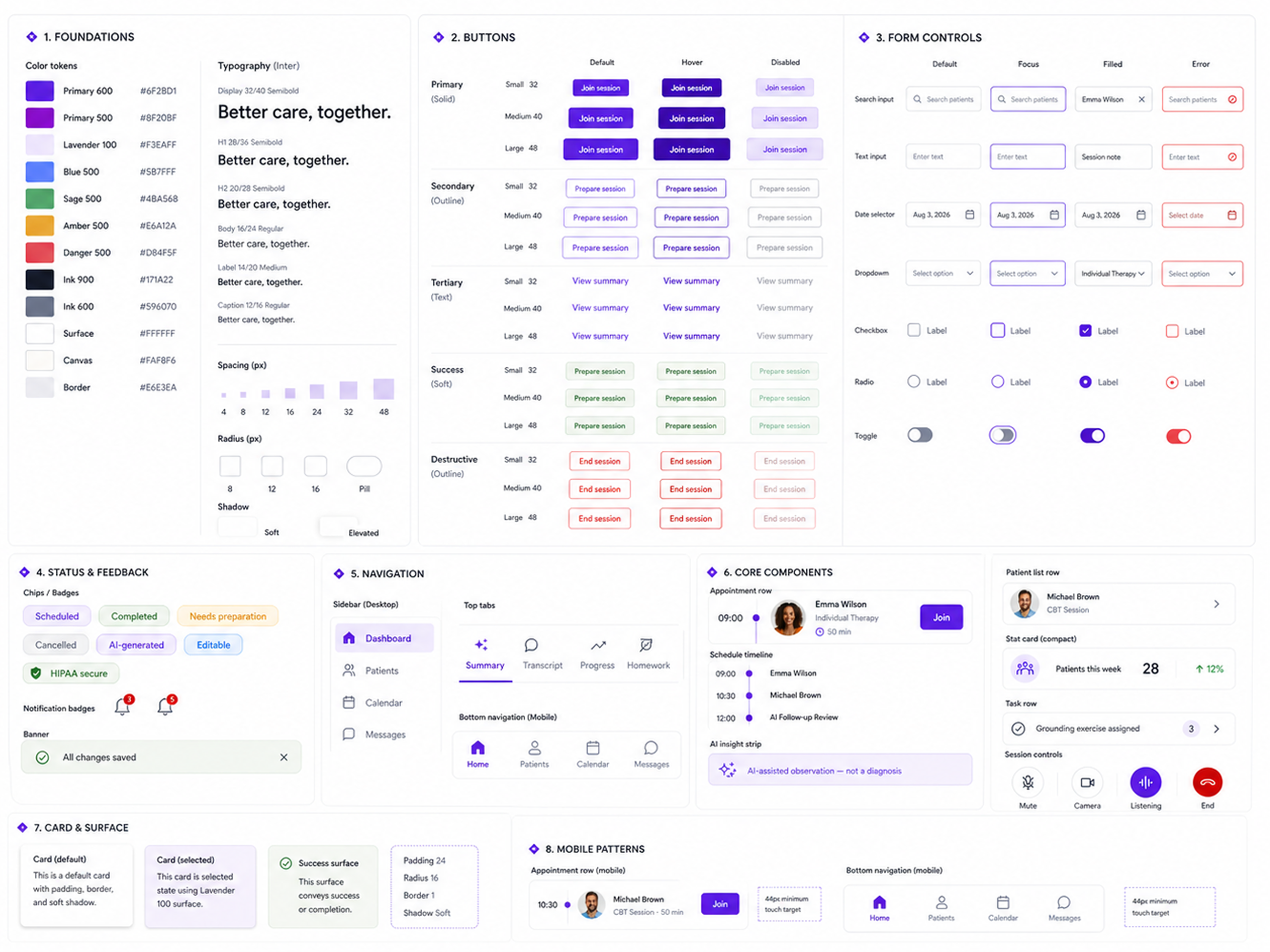
The visual language used soft contrast, clear hierarchy, restrained color, and consistent interaction states. The system needed to support emotionally sensitive conversations without becoming decorative, clinical, or visually overwhelming.
One connected experience for ongoing AI-assisted and professional care.
BetterYou brought AI-assisted conversations, professional sessions, session records, scheduling, and longitudinal patient context into a unified product experience.
Designing AI for emotionally sensitive moments.
This project reinforced that designing AI for mental health is fundamentally different from designing a productivity tool.
The experience must account for emotional vulnerability, uncertainty, privacy, continuity, and the limits of generated information. AI can help structure conversations and make context easier to review, but the product must preserve transparency and keep professional judgment visible throughout the experience.
How should the system communicate uncertainty?
When should an AI session escalate to human support?
How can professionals verify generated summaries efficiently?
Which information should persist between sessions?
How should sensitive memories and generated imagery be stored or removed?
Cartsy AI
Designing an AI-assisted grocery experience around everyday decisions.